Tuesday, May 19, 2009

Drinkin' Kava with the Pacific Islanders


For a belated Mother's Day gift, my daughter took me to the annual lü'au at Portland State University. Students from Hawai'i, Tonga, Samoa and Tahiti performed dances after everyone enjoyed the traditional lü'au foods.

As we were finishing our dinners, someone came to the mike and called our attention to a corner of the gym where a group of young Polynesian men were enjoying bowls of kava. Anyone who wanted to try it was invited to join them. So, of course, I did, squatting down on a grass mat and accepting a half-shell of a coconut full of the cloudy drink.

Kava, also known as 'awa in Hawai'i, is a traditional drink throughout the Pacific, imbibed socially before events such as meetings, weddings and hö'ike (shows), such as the one we were about to watch. The drink is made from pounding the root of the kava plant and mixing the resultant powder with water. The drink was in a large bowl and people were taking turns drinking from the shells. With a quick prayer that none of the other kava drinkers had swine flu, I took a drink. Well, actually, I drank the whole bowl.

The taste was not unpleasant, though not really pleasant, either. It tasted sort of like a very flat beer or watery gruel at room temperature. I felt a little numbness around my mouth, which I later learned was normal. After about 20 minutes the effect of drinking kava is said to be calmness, clarity of thought and a sense of well being. I wasn't consciously looking for those results, since I didn't know what to expect. But looking back, I felt quite pleasant during the show and wasn't the least bit annoyed that it ran over by about an hour. So maybe the kava did its job for me.

I learned that kava is not addictive and does not cause hangovers. Until we get out of this recession, I may become a regular kava drinker!

Sunday, May 10, 2009

Makua Laiana

Our halau often practices singing "Hawai'i Aloha," which is sort of an anthem in Hawaii, sung while standing (sometimes even holding hands) at the conclusion of public events. Our occasional hula shows also end with the singing of this uplifting tune.

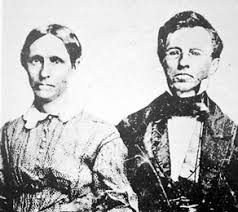
The history of "Hawai'i Aloha" is pretty interesting because it involves a very rare thing: an American missionary who actually respected the native culture. The Reverend Lorenzo Lyons, a Congregationalist minister from Massachusetts, made a point of learning the Hawaiian language. He became fluent and even composed poetry and hymns in Hawaiian.

His rather sizable congregation on Hawai'i Island felt great affection and respect for him. They called him "Makua Laiana, haku mele o ka 'ä'ina mauna" (Father Lyons, lyric poet of the mountain country).

King Kamehameha IV, who reigned from 1855 to 1863, really liked the tune of the Scots hymn "I Left It All With Jesus." The king asked Rev. Lyons to compose a song in Hawaiian to fit the tune. The result was "Hawai'i Aloha." Click here to see the late Israel Kamakawiwo'ole (Bruddah Iz) sing and play this beautiful song.

Rev. Lyons lived on the slopes of Mauna Kea at Waimea on the Big Island from 1832 until his death in 1886. He converted thousands of Hawaiians to Christianity and built a total of 14 churches to accommodate them all. He also translated hundreds of Christian hymns from English to Hawaiian and published a hymn book which he supplied to churches throughout the Islands.

Sunday, May 3, 2009

Odds 'n' Ends


My Fun Fact for my hula class last week was taken from an article I read online from the Honolulu Star Bulletin. It was an interview with the founder of the Hula Preservation Society regarding the results of last month's Merrie Monarch Festival in Hilo.

She said in previous years, elders in the hula community found themselves dismayed by the dances performed. Nothing about them was familiar to them. Traditional dances were being ignored in favor of newer variations.

But this year the küpuna (elders) were delighted. In the kahiko (ancient) portion of the competition there were four mele ma'i (procreation chants) performed. Of the four, two were top winners: "Tü 'Oe,"performed by the Ke Kai O Ka Hiki halau, led by kumu hula O'Brian Eselau; and "He Ma'i No Kalani Ha'u Ha'u E," performed by Hälau Nä Mamo O Pu'uanahulu, with kumu hula Sonny Ching.

I was glad to see that mele ma'i is the in thing now. After all, my halau has by now become quite adept at dancing "Ka Ua I Hämäkua," a procreation chant (also known as a genital chant) honoring Kamehameha the Great. As I told my class, by now we are veritable gynecologists of the mele ma'i.

In other news, I'm excited about the Native Arts & Cultures Foundation, which has been created in Portland by the Ford Foundation to support and promote the arts and cultures of the American Indian, Native Hawaiian and Alaska Native communities. The new CEO of the foundation is a native Hawaiian, Tara Lulani Arquette, formerly the executive director of the Native Hawaiian Hospitality Association, who is moving from Honolulu to lead the organization. 'E komo mai (welcome) to Portland, Tara!

Friday, April 24, 2009

Brother Taro

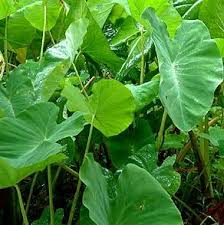
My Fun Fact this week was about the taro plant. In Hawaii, that's an ancient topic. It's said that the first Polynesians to settle the islands actually brought the taro plant with them. Once cultivated, taro -- and poi, made from boiling and pounding the root of the plant -- became a staple.

My Fun Fact was actually a current event report. Last week, the Hawaiian Legislature voted to prohibit genetic modification of Hawaiian varieties of the taro plant. Taro is already the official state plant, but proponents of the bill felt it was necessary to protect the plant from being altered through scientific tinkering.

Botanists at the University of Hawaii opposed the bill, saying that genetic engineering can actually protect plants from disease. But others argued that allowing scientists to change the plant was in effect biopiracy. That was a new one on me. But as I learned, the definition of biopiracy is an attempt by organizations, such as food-producing corporations and universities, to patent or otherwise claim the rights to native-grown foods of indigenous peoples.

One reason many Hawaiians were adamant about protecting the taro is that the plant is considered sacred. According to myth, Wakea, also known as Sky Father, created the islands and the Hawaiians. But his first-born son, whom he named Häloa, was badly deformed and stillborn. From the dead baby's grave sprang a plant, the taro.

The next-born son, also named Häloa, was the first Hawaiian. The growing plant was considered to be his elder brother. And that belief, that the taro is the elder brother of all Hawaiians, has been held for generations. It's said that when a Hawaiian eats poi, he or she actually ingests the mana (power) of Häloa the elder brother. We could all use some big brother power from time to time.

Monday, April 20, 2009

Sticks and Stones

I missed hula class last week. I got seduced by promises of bright lights, hot spots and being in with the in crowd. So I attended a play, "I Am My Own Wife," and the after party at Departure, the ultra-hot new rooftop restaurant at The Nines Hotel, that was thrown by Portland celebrity, Thomas Lauderdale, leader of Pink Martini. Ho hum. No hula for me, thanks. I can't dance with a glass of champagne in my hand.

But I got back into the hula groove on Saturday morning when my hula sister Debbie invited the class to her house to commemorate the last day of the 2009 Merrie Monarch Festival by watching her DVD of last year's festival. More champagne, this time in mimosas, and a potluck brunch to enjoy while we watched the kahiko (ancient) dance competition, with halaus from Hawai'i, Las Vegas, Oakland and L.A. To reach the level where they'd be invited to compete in Merrie Monarch, they would have to be very good to begin with. And these groups were downright inspiring -- dancing in synch, keeping their lines straight, loudly vocalizing their kaheä (refrains from the chant).

We hula sisters, perhaps loosened up a bit from the mimosas, were loud in vocalizing our approval of the kane (men) dancers, and we had a few choice words for the hunky men that were adorned with malo (loin cloths) tied with big bows in front. From the safety of Debbie's couch, we voiced some bold ideas about untying those bows.

But what we really liked were the sticks and stones. We loved a dance performed with long sticks, about four feet long or so, that the dancers shook fiercely and pounded on the floor. It was very dramatic. I learned that the name for stick dancing is kälä'au.

Another great performance was by a group of women who all held two rocks in each hand and clicked them like castanets. The rocks used in this fashion are called 'ili'ili. (As a longtime Portlander, I couldn't help but think of the old elevator operators at Meier & Frank -- now The Nines Hotel -- who'd attract riders with a click of their castanets. Ah, memories . . . )

We also liked the groups that equipped each dancer with her own ipu, or gourd. In our experience, the ipu has been used only to beat time in our dances. But these women waved them around in a kind of gourd ballet. Their ipus were not small, either. It was great upper body exercise! We were so impressed by their exertion that we poured ourselves another mimosa.

Sunday, April 12, 2009

Going Hawaiian in Portland


I had a super Hawaiian weekend here in Portland, starting with the Hapa concert at the Aladdin Theater. I got tickets for me and my friend Rod, who grew up on O'ahu. We planned a whole Hawaiian evening, starting with dinner at the Ohana Hawaiian Cafe.

Of the Hawaiian restaurants I've tried in Portland, that's my favorite. It's a small and simple cafe run by a friendly young couple. She does the cooking; he makes sure the customers are happy. Rod and I were very happy with our meal. He chose the teriyaki chicken and I had the teriyaki beef and both meals came with the requisite scoop of rice and macaroni salad. We had Hawaiian fruit juice with our meal and for dessert we both had haupia, coconut custard. Rod said the haupia at Ohana was the best he'd ever tasted. The fact that it was topped with whipped cream and toasted coconut didn't hurt.

The place was packed and I told the owner I assumed everybody there was filling up on Hawaiian food before going to the Hapa concert, but he said it's always packed on Friday night.

But because it was so busy, our plan of getting to the Aladdin shortly after doors opened so we could sit up front was foiled. We got there 10 minutes before the concert began. Like the restaurant, the theater was packed. It appeared that most of the audience were Hapa regulars and never miss seeing them when they pass through Portland. I had only seen them perform once before, when Rod and I saw them at the Oregon Zoo last summer. But the zoo crowd is so rowdy that we could hardly hear the music.

The Aladdin was the perfect setting and even though Rod and I were sitting toward the back, we felt swept up in the intimacy of the space and the mutual affection the three band members and the appreciative audience felt. I was most looking forward to seeing Charles Ka'upu, who chants and talks story throughout the performance. He wasn't able to make it to the show at the zoo last year, but I soon heard his voice when he began walking down the aisle to the stage, chanting a welcome oli. I actually met him a couple of years ago at a luncheon for Portland travel writers put on by Maui tourism. He came along and did a welcome chant for the journalists. I had no idea he was part of Hapa and had an international following.

The singing, chanting and the hula dances by Miss Aloha and guest dancers were all quite wonderful. A truly magical evening.

But the very next night I was at it again. I decided it was about time I attended Pacific University's annual lu'au and hula show. This was the 49th annual event put on at the Forest Grove university by its considerable population of Hawaiian and Pacific Islander students. Guess I shouldn't complain about the lu'au part, since it's for a good cause, but the school tray with kalua pig, teriyaki chicken, rice and chicken long rice in the little compartments wasn't particularly inviting, especially with a plastic fork to eat it with. But I was game and even ate my serving of poi.

The hula show, however, was fabulous. The costuming alone, as shown in the above photo, was a major production. There were separate costumes, all amazing, for the almost 20 numbers. And the costumes really ran the gamut, from more traditional ensembles to ultra-modern and flashy outfits. The dancers were accompanied by their own musicians, a very talented lot who played guitars and 'ukuleles and sang. The kid who played the 'ukulele was a virtuoso!

The event includes one dance performed by non-Hawaiians. There is a hula course offered at the university so non-Hawaiians can learn the basics, enough to have their own dance in the show. All the dancers were quite wonderful.

Now that I know what an outstanding event it is, I will be sure to mark my calendar and buy my ticket in plenty of time for next April's major event, the 50th annual Pacific University Lu'au. It promises to be a great show.

Saturday, April 11, 2009

Hula Costuming

It's that time of the year again when our halau starts planning for summer hula performances and ordering all the necessary fabric, dresses and accouterments for our costumes.

We need two costumes, one for the 'auana, or modern hula, and one for the kahiko, literally ancient, but meaning the more traditional hula. The basic difference between the two styles is that 'auana hula is more carefree, with lots of smiles and "modern" instruments, namely ukuleles and guitars.

The costume is usually a long, figure-fitting dress in a pretty Hawaiian print. We usually order our dresses from CC Fashions in Honolulu. I stopped by there when I was in Honolulu in February and it was clear they cater to the Japanese hula dancers, with all signs in Kanji and sales people fluent in Japanese.

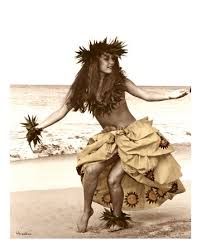
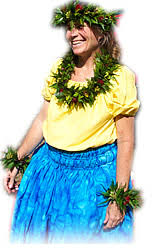
For our kahiko dance, accompanied only by the ipu gourd drum and chanting, we will probably sew our own costume, basically a skirt and top in cotton/poly fabric, with lots of elastic here and there. But what really completes the kahiko costume is the küpe'e, or adornment.

We wear leafy bands on our wrists, ankles and head, sometimes neck, as well. In Hawai'i, there are really gung-ho halaus that seek their küpe'e in the forest and string the leaves together. We order silk leaves already strung together with elastic.

For my Fun Fact at our last class, I shared some information about how hula dancers costumed in days of yore. Don't tell my beloved dog Daphne this, but in the old days küpe'e often were constructed from dog teeth. The choppers were pierced and then strung together, sometimes on fiber netting to make six or so rows of clinking, clanking teeth. This garment was tied on the calf right under the knee. It was an adornment as well as musical instrument, for the noise of the chattering teeth contributed to the performance.

The purpose of the küpe'e was to draw attention to the movements of the hands and feet. After all, that's where the hula story is told.

Back then, the skirt, called a pä'ü, was not poly/cotton, but was made of kapa, which was pounded bark. The resulting fabric was decorated with stamped and painted patterns.

The men wore a malo, a loincloth made of kapa. And they and the women dancers went topless. Ah, the good old days!