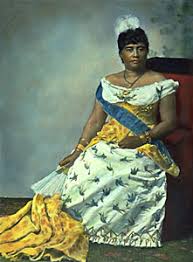
Last week I gave my hula class a book review as a new form of my usual Fun Fact presentation. The book was "Bird of Another Heaven," by James D. Houston. The novel has a Hawaiian theme and was written by a man who made Hawaiian culture his passion.
Actually, I didn't know about James Houston until after he died from cancer at age 75, in April 2009. I came across an obituary which portrayed him as a fascinating figure. He and his wife lived in Santa Cruz, California, but made frequent trips to Hawai'i, where he had made numerous friends. For more than 20 years he was a close friend of Eddie Kamae, one of the original musicians in the seminal "Sons of Hawai'i" group. The group, which featured the singing and slack key guitar playing of the legendary Gabby Pahinui, was given much credit for the Hawaiian Renaissance of the 1970s and 80s. Eddie Kamae, in particular, did extensive research and field work in order to find and revive the songs and music of Old Hawai'i.
Kamae also made a number of documentary films about Hawaiian culture, and Houston was his partner in the film making by helping to write the scripts. I have seen their film, "Sons of Hawai'i," about the musical group, which was fascinating.
Houston wrote a biography of Kamae, as well as a book about surfing. But as far as I know, "Bird of Another Heaven," was his only Hawai'i-themed work of fiction.
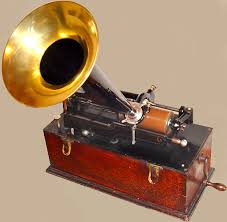
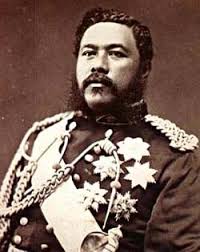 The story is based on historical fact, dealing partly with the final voyage by Hawai'i's last king, Kalâkaua. While staying at San Francisco's beautiful Palace Hotel (still standing and still beautiful), the king fell ill. One day he felt well enough to welcome a visitor from Thomas Edison's lab, who wanted to record
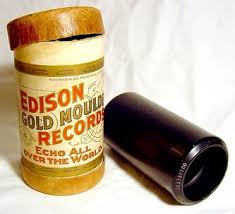 the king's voice on the new-fangled recording device Edison had invented, a wax cylinder that could be played on a gramophone. The actual cylinder is at Honolulu's Bishop Museum.
Kalâkaua made the recording, a greeting to his people in the Hawaiian language, but just a few days later, on January 20, 1891, died in his hotel suite. He was 54. The circumstances of his rather sudden death are still questioned, and, in fact, Houston depicts a murder scene in his novel, showing a villain delivering poisoned tea, while greedy American businessmen in Honolulu wring their hands
 in happy anticipation of freedom from the king's trade restraints.
Houston creates a half Hawaiian-half American Indian character as Kalâkaua's young lover. The novel moves forward in time to introduce a young man who discovers a side of his family that was hidden from him. When he finally meets his grandmother, she gives him her mother's journal, all about her affair with the king and the final days they spent together before his death. She also gives him a wax cylinder that her mother had kept, a second recording that no one else knew about.
In the novel an archivist at the Bishop Museum advises him to take the cylinder to a lab in California that would have the appropriate technology in order to retrieve the king's voice. At the lab, the scientists do their darnedest, but are unable to retrieve more than a few indecipherable sounds, not even entire words.
As I gathered my facts for my Fun Fact presentation, I quickly Googled the book title, just to make sure I hadn't missed anything really important. Down the page, my eye caught a small news item.
In May 2009, one month after the death of James Houston, Hawaiian Airlines gave the Bishop Museum a grant to cover the cost of taking the Edison wax cylinder bearing the king's message, which had been in the museum since 1918, to a lab in California in order to recover the spoken words.

Life imitates art! I was blown away. This sounded almost exactly like the scene Houston had created in his mind when he wrote the novel, which was published in 2007. But this episode actually occurred in real life one month after the author's death. The existence of a second cylinder was pure fiction, but in describing the analysis of the one existing cylinder, Houston seemed to be a fortune teller.
I Googled and Googled and Googled and could find no follow-up story. According to the article, having the cylinder tested with laser technology and retrieving the recording would take no more than five months. So the results should have been available by October.
There were just a few hours before I had to leave for my hula class. My hula sisters had to know! I picked up the phone and called the public affairs office of the Lawrence Berkeley National Laboratory in Berkeley, California. The director told me he'd been at his job only two months; he had never heard of this project. He asked me to email him and he'd reply when he found an answer.
I was so impatient for information. It was two hours earlier in Honolulu. The archivists at the Bishop Museum would still be on the job. I called the museum and asked for the head archivist, a man with a name that is one step up from Indiana Jones. His name is DeSoto Brown.
Mr. Brown's phone message stated that trying to reach him by phone was futile; he left his email address. I wrote him a message, asking for information about the cylinder. He never replied.
A few days passed and I heard back from Berkeley Lab. A woman wrote and said that a team from the Bishop Museum had come and gone. The results were disappointing: the 118-year-old wax cylinder had deteriorated so much that no discernible word could be retrieved, just a few disparate sounds.
She referred me to the vice president of public operations at the Bishop Museum. He has a less interesting name than DeSoto Brown, but I was hoping the Blair Collis would take my call or answer my email. I was so curious and had so many questions. But alas. Apparently the Bishop Museum doesn't want to talk about it. I never heard back from anybody.
Still, it is pretty amazing that almost identical circumstances occurred in a novel written a couple of years before the cylinder made its futile journey to the Berkeley Lab. And by the way, I highly recommend "Bird of Another Heaven." It's quite a convincing story!